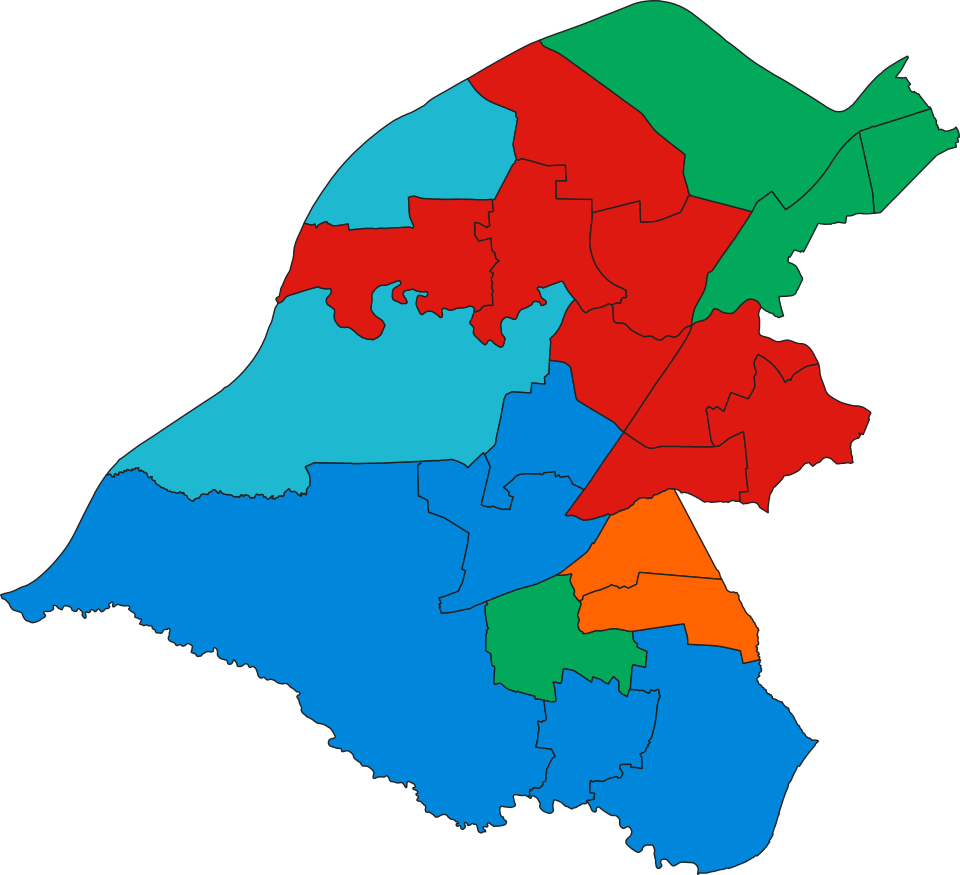
The recent local election results have reshaped Trafford’s political landscape. Voter turnout increased significantly from last time, reflecting the strength of the message voters were sending. The Green Party has emerged as the most popular in Trafford, but the electoral map suggests an upcoming period of no overall control. It is unlikely that this situation will reverse in the near future.
Several incumbents were unseated by new challengers, signalling a clear demand for change. The extent to which this reflects a desire for a change in government, or a shift within Trafford itself remains to be seen. What is certain is that it was never an endorsement to continue as before.
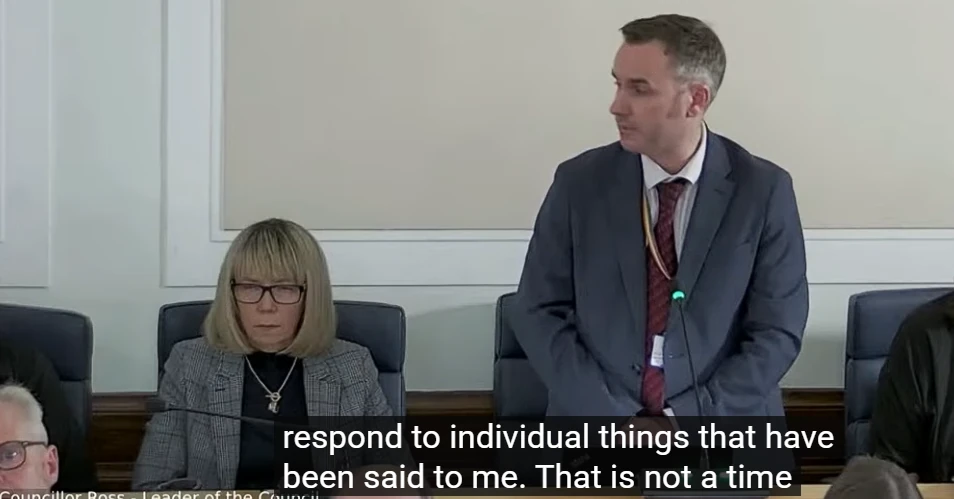
Sadly, I think Tom Ross, the leader of Trafford’s Labour Group has given himself too little time to reflect on changes that could improve the party’s local fortune. He’s made minimal change to an executive that too often takes a back seat to both the leader and to senior officers. He’s got to be prepared to show the door to those underperforming and not wait for the electorate to do the job for him, particularly since the electorate have just demonstrated that they will often take out the better members of his team.
The loss of two good cabinet members has forced a minimal change on Tom and I do welcome the promotions of Keleigh Glenton and Barry Winstanley to the executive. I just think Tom should have made deeper changes. We have been hopeless at communicating on the most basic universal services that the public judges us by.
The Labour Party has lost the art of talking to and listening to people. How often do our lead members go out in front of residents to explain the state of their roads or why bins are not emptied etc? Their answer to everything is to tell us report, but there’s no engagement on the question as to how it’s allowed to happen in the first place. Too often it feels like we’re dealing with a pencil monitor. You need the right chit or you won’t make progress. If we do the right thing, jump through the right hoops to report and it’s still not done, then you can go to your ward councillor, but they never get an answer as to why it’s allowed to happen in the first place.
There’s genuine opportunities to improve the relationship with voters, but it won’t be done via short form videos on TikTok and Instagram. It requires lead members who genuinely look like they take responsibility for their service areas, are willing to go out and engage with the public, take some flak, show some empathy and follow up.
Labour’s on course to lose control of Trafford Council next year. It has a choice to just carry on as it is doing and blame it all on Labour’s national leadership or it can start properly communicating and explaining how it’s meeting various challenges.
Nominations have closed on the May 7th local elections. In the 21 wards of Trafford, we have five parties contesting every seat:
Party
Candidates
Conservative
21
Greens
21
Labour
21
Lib Dems
21
Reform
21
The Reform breakaway party Advance, are contesting 6 seats. In addition there’s 2 independents and there is a lone Social Democratic Party candidate in Sale Central.
What’s going to happen when the votes are counted next day on May 8th?
Ben Walker is a respected pollster who came closest to predicting the last General Election result. He writes for the New Statesman and is founder of the Britain Elects aggregation site. He’s also a Labour Councillor in not so far off, Chester. I have a lot of time for Ben.
A Labour bloodbath across England? Won’t it be worse in Trafford?
If that’s the forecast for England, what on earth is it going to like in Trafford where we’ve been hit by one the worst government settlements in the country? We’ve had to put council tax up beyond the maximum allowed, we’ve had to borrow millions just to keep the town hall doors open. It’s surely got to be worse here?
Here’s my take.
I predict Labour will remain comfortably the largest party and will win the popular vote.
There will be no bloodbath here.
Yet, it could still be seminal in terms of the Tories vacating their position as contenders for power.
It’s often that the biggest factor is the quality of your opposition. Labour is extremely fortunate that the current Tories are contesting their right flank more than trying to win the centre ground.
Clearly, the presence of Reform and Advance are factors in this, but it’s got to be said there’s little evidence of the Tories wanting to widen their appeal. We’ll see, but this is Trafford, it was once their flagship.
Labour will be glad too, to have a Lib Dem party in Trafford that’s made itself into a single issue party focused entirely on Timperley.
The Greens may prove themselves to be the biggest threat, but it’s proved hard for them to get a foothold in the north of the borough. If they can take a seat in Old Trafford, they’ll be pleased with their progress, but only if they hold on to their Altrincham and Hale seats.
Reform managed to lose a seat this week to the Greens in a Kent by-election. The public are picking up that Reform can’t run councils. They’re struggling in Kent, they’re putting Council Tax up in Worcestershire by the largest amount in the country.
The real question will be as to whether a solid performance across the wards by Labour will be seen as a ringing endorsement of their programme. I would argue that you need to look at the total Labour vote, not just the seats.
2024 votes across Trafford
Labour
29,338
41.83%
Conservatives
17,645
25.16%
Green
12,643
18.03%
Lib Dem
7,983
11.38%
Reform
1,595
2.27%
Independents
842
1.20%
TUSC
88
0.13%
70,134
Can the Greens come second?
Reform only contested a handful of seats in 2024, so it’s inevitable their vote will grow. Could we see the Greens come second in the vote this time around? It would only require a 3.57% swing from the Conservatives. Given the disproportionate impact of Reform, I am going to stick my neck out and make that my prediction.
It’s possible Labour lose more votes, but it’s increasingly likely the Tories will suffer the bigger fall from grace.
Trafford’s 26/27 budget passed its final hurdle when it was approved by council. It was a dreadful meeting that you can watch here in all its glory on YouTube:
The Conservatives accepted the plan to borrow up to £12.6m to support the budget for the year, but verbally rejected the need to increase council tax above the 4.99% ceiling. (There was some knockabout debate about whether their motion did indeed limit the council tax rise, but they were definitely prepared to borrow.)
The Lib Dems took the view that since we were nowhere near a balanced budget without borrowing, the finance officer should declare bankruptcy under section 114 and demand government intervention.
The Greens accepted the budget, but because they oppose the relief road in Carrington (although it’s not in the budget), they would vote against the budget.
I voted for the budget and did so unreservedly. It’s my view that the Council Leadership and their officers have correctly held their nerve against further cuts to services and resolved to pressure for a fairer settlement.
What made it a really poor debate was that the architects of our misfortune were almost completely left out of the debate.
I remain a Labour man and will always try to defend their choices, but the Government’s finance settlement is ludicrously miscued. They have rightly targeted areas of higher levels of deprivation for extra funding, but they’ve sourced that funding from middling council areas. Places like Trafford, Warrington and Crewe have all been pushed into taking out huge loans to support day to day spending. Not so long ago, councillors who voted for such budgets would have been personally surcharged. Now government wants us put our budget on the tick and it barely gets a mention.
Northwest Councils requiring borrowing to support revenue.
If you cross the River Mersey in the right places you can travel from Southport to Worcestershire on a continuous route through boroughs receiving the same punishment beating as Trafford.
I’m no fan of Morgan McSweeney’s friend, the Maga hat wearing Steve Reed, who is the Local Government minister that targeted the North West’s commuter belt, but surely he can see these places are not just the homes of premier league footballers, but contain levels of deprivation and isolation just as chronic as inner-cities. We need to get angry.
What happens now?
I suppose it’s easy for me stamping my feet. Trafford’s leadership has to continue to make the case through the normal channels and to seek Greater Manchester support, even assistance. I’d like to see us making a more collective call with the other councils, particularly those in the North West.
The Conservative Party are moving a no-confidence motion at Council tonight that sounds like it’s been dictated to by a caller to Talk Radio. It’s all over the place. It will be a farcical debate that will be lucky to get 15 minutes granted to it. The financial management of the council is the wrong thing to take on, and in any event, we’re about 7 weeks from an election, where the public decide their backing for the council.
Thankfully, I won’t be able to attend tonight’s council meeting, but the Conservatives really ought to pull that motion. It’s just a rant from them.
Finally,
So, this is really the last piece on Budget 26. I’ve enjoyed writing the articles. They’ve helped me focus and try to unpick a budget that wasn’t afforded the level of scrutiny that should be mandatory. That said, the budget that eventually was revealed to councillors is probably the right one. There’ll be a tweak here or there that I’d make, but I don’t think it’s massively wrong.
However, whilst the budget may have emerged from this intact, the democratic mechanics in Trafford have broken and the checks that should enable input from outside the Council Executive and Corporate Leadership simply aren’t functioning. The closedown of council for two by-elections held in quick succession took away 80% of the time normally allotted to budget scrutiny and had no basis in guidance. That is serious.
Just as serious is the lack of public engagement. The community knows that consultation has become a word that the council uses that has no relation to its English meaning. Not so long ago the trajectory was towards co-production of budgets with participation. It’s gone backwards during my time as councillor.
The public have declining confidence in those low-level spending decisions, which roads get prioritised, which parks, where ‘hubs’ are located. This may be the right budget for Trafford, but I doubt the public will believe that it will be administered fairly. They see where money is spent and where it is not spent, but explanations are never easily available and cynicism is a natural consequence.
Councils are not overlords. We as councillors are representatives of the electors, and officers are agents of that representation. We’ve got to allow public into decisions on how their council tax is spent.
Last words
It’s a god-awful settlement from government on how much of the money raised in Trafford can be spent in Trafford. There’s not much else that can be said.
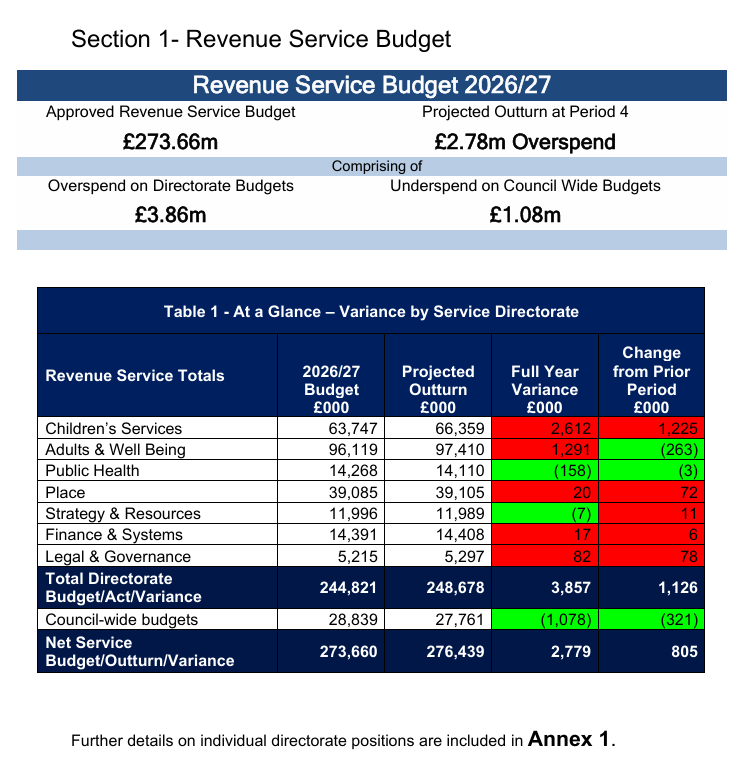
In terms of spending choices, as one would expect there’s not a huge difference from the draft budget released in January. The proposed net budget is £274m compared to the £277m originally projected, which is good. It’s about the only good thing on show.
We knew that the Government had determined that we needed to be able to increase Council Tax by an additional 2.5% compared to the standard rise. That 7.5% is therefore built into this final budget.
We’ve been granted the facility to borrow £12.64m for the coming year. This is on top of borrowing £9.6m or thereabouts for the year that’s coming to an end.
Borrowing is not routine, it’s a seismic change.
The act of borrowing to support day to day spending has always been outlawed and rightly so! I don’t like it at all. Fundamentally, it’s borrowing from future budgets. It’s particularly worrying when future finances do not look any rosier.
Given this is a three year settlement, you would hope we could see light at the end of the tunnel, but there’s no sign yet of a balanced budget, albeit there is a narrowed gap in 2028.
I learn from the local democracy reporting service that Sefton is looking to a fire sale of assets to balance its budget. This seems to require Government permission.
Trafford hasn’t committed using receipts from its land sales. However, the land sales plan routinely contains the paragraph:
Receipts generated from the disposal of sites as detailed in Category 1 and returns from development of sites detailed in Category 2 are currently earmarked to directly support the Capital Programme, although these could also be used to support the wider strategic management of Council borrowing.
They’ve not used receipts before, as far as I am aware, to support the management of borrowing, but we’ve never been in this position.
The more I think of Trafford, Warrington, Cheshire East and Sefton, the angrier I get on their behalf. I can’t believe how passively we’re all accepting this absolutely dreadful settlement from Government.
Yes, there’s an argument that our council tax level in Trafford is somewhat adrift from what it really ought to be to deliver the standard of service people want, but the comparison with Manchester’s settlement is just too extreme. The difference that’s going to become apparent between Old Trafford and Whalley Range is so unjustifiable it needs to be screamed at Government. I’m appalled.
Budget Documents
The 26/27 Final Budget Proposals (109) pages Key Parts – Report of the Director of Finance and Systems on the Robustness of the Proposed Budget Estimates and the Adequacy of Financial Reserves (Page 9) Financial Background (Page 33) The Budget – Page 59 Savings Proposals – Page 86
Budget Scrutiny Response These are the executive’s answers to the recommendations of the scrutiny committee. (The Scrutiny don’t seem to have been given access to questions over financing the budget gap. It’s certainly not raised.) Given that effective scrutiny was particular emphasis of the peer review of Trafford, I don’t know that this serves Trafford.
The Government’s settlement for local government has left some councils in a desperate situation, whilst others are busily working out how they’re going to spend the extra money.
I don’t have to be polite. This is a ridiculous way to proceed. You’re not going to get value for money at either extreme.
Nevertheless, we’re in the spotlight. Are we going to get a visit from the Government inspector? The Bishop of Bath and Wells?Are we on our own?
It’s bleak for us.
So, what about the councils around us?
Manchester
Core Spending Power increases from £786m to £874m, an 11.2% increase. This core spending power equates to £1438 per person.
The budget papers go to scrutiny on Monday 23rd February.
They’re very pleased!
This is a positive settlement for Manchester, by 2028/29 the Council’s overall CSP is forecast to be around 32% higher in cash terms and 24.2% higher in real terms then 2025/26. After accounting for projected population growth this translates to an average 22.9% real terms increase in funding per resident.
Salford
Core Spending Power increases from £399m to £424m, a 6.3% increase. This core spending equates to £1431 per person, not a great deal less than Manchester’s.
The budget goes to cabinet tomorrow 17th February. They’re very pleased!
This settlement marks a fundamental shift in local government funding, with significant redistribution, new formulas, and a move towards consolidated grants. This settlement will result in the most significant redistribution of funding within the sector in the last 25 years.
Warrington
Continuing anti-clockwise around Trafford’s border we come to Warrington. Like Trafford, Warrington has been allowed to increase its council tax by 7.99%.
Core spending increases from £237m to £242m, a 4.5% increase. This figure is calculated before the extra 2.5% council tax is applied, but it’s noteworthy that the increase in core spending is already less than the increase in council tax. This core spending equates to £1109 per person, substantially down on Manchester and Salford.
Their budget plan goes to scrutiny tonight (16th February). There’s an open acknowledgement they’re in serious difficulty. Their 3 year budget gap has increased from £90m to £130m since December.
It’s fair to say they’re in a perilous position as their cabinet member for finance explains in the accompanying press release.
This is almost a confessional to a person holding a hot poker.
The reports published today detail that our difficulties stem from inadequate budget control, an over-ambitious commercial approach, and several years of unaudited accounts.
We are victim to national issues, such as rising demands and costs for some services, particularly services that support our young people, families and older adults.
But specific local issues have also played a significant role in driving our budget issues.
In recent years, instead of making difficult service cuts when many other councils did, we have relied heavily on income generated from our commercial activity. And, while our commercial portfolio has provided a surplus of around £166 million since 2009, all of this money has been used towards covering successive budget gaps.
Cllr Denis Matthews, Cabinet Member for Finance, Warrington Council
Cheshire East
Continuing our trip around the councils that border Trafford, we come to Cheshire East. Their town hall is based in Macclesfield, but the local authority area comes right up to the outskirts of Altrincham. Cheshire East is in the unenviable position of having a request to increase its council tax refused by government. They wanted a 9% increase but have not been granted any dispensation beyond the standard 4.99%. Politically, they’re facing a vote of no confidence.
Core Spending Power increases from £430m to £452m, a 5.2% increase. This core spending power equates to £1062 per person.
Cheshire East are recognising that even with Government support via EFS this is a difficult position.
The section 151 officer issued the following statement of assurance on the authority’s financial position:
Assurance Statement of the Chief Financial Officer
The risks in the 2026/27 budget are predominantly in relation to costs associated with demand in Adult and Children Social Care, the delivery of the Improvement and Transformation programme and the Council’s position on the DSG deficit.
Moreover, the inadequate level of general reserves will require the Council to continue to rely on the provision of EFS in order to balance the budget for 2026/27 and future years.
This is not a financially sustainable position and the financial challenges for the Council remain acutely difficult. It is only with the support of EFS that the Council can set a balanced budget and this is not a sustainable position.
Trafford
Core Spending Power increases from £247m to £251m, an exceptionally paltry 1.9% increase. This core spending power equates to £1041 per person which is the lowest of all these councils.
The draft budget is due to be published tonight. Of the four councils that border Trafford, two are in a parlous position and two are in clover.
Trafford has by far the lowest financial spend of the five councils, yet it collects the most per person when you add in business rate collection.
Some of the negative comments I’ve seen on social media about the financial challenge are a disgrace and there’s a significant political opportunism from people that should know better.
Trafford’s predicament is not one of a spendthrift council. One might argue that council tax was so low that it prevented sufficient flexibility in the reserves.
The graph below shows how Trafford has always lagged its neighbours in terms of council tax. Note the uppermost plot is the England average. All these local rates are lower than the average.
My previous post on setting the budget ended with the words,
Over to the Government
All options are possible: worse, same or getting better.
Fingers crossed.
This was the week we found out.
Monday – I hate Mondays
The final settlement for most local authorities was published.
The key figure is the 1.9% increase in core spending power. This is based on Council Tax increasing by 4.99%. Yet local budget pressures are increasing by 18.81%. There’s a considerable gap.
The Govt recognised that the ceiling of 4.99% on council tax increases would place Trafford in an extremely difficult position and has consequently granted the facility to make an additional increase of 2.5%.
It’s at this point that the proverbial hit the fan. The fact that Trafford is one of a small number councils requiring this facility has shocked residents. Social Media has been on fire. It’s not been pleasant.
It’s hard to disagree with lots of these comments. The council tax increase is not going to result in notable improvements to service. The truth is that we’ve been hit by changes to the formula used by government to determine the distribution of centrally held funds.
Areas with high levels of deprivation have benefited from both increases to core funding and a recovery grant that’s given a substantial pick-me-up to most of our neighbouring councils. Only Stockport along with ourselves have missed out. Stockport has a much, much higher council tax with which to absorb this discrepancy. Trafford’s low council tax has kept us lean, but it’s left us incredibly exposed in facing this perfect storm.
We’re going to have borrow
This really worries me. We were given facility to borrow £9.6m to support this year’s budget, and it looks like we’ll be utilising most of it. We’re awaiting news of what the government proposes the facility will be for next year, but it could be more than last year.
I’m standing down in May and I hate the idea that I’m passing debt onto my successors because we didn’t have enough to pay for day to day spending. We’ve surely got to do as much as we can to limit this borrowing.
If we were able to set our council tax to the average level, we’d be able to avoid borrowing, but that would require an increase of about 17%. Despite it being the normal rate elsewhere, Trafford residents would not weather an extra 17% increase.
So where does that leave us?
Councillors will have to take the hit what is really an unsatisfactory compromise – unwelcome increases in council tax, a level of service that doesn’t meet expectations and increased risk of much worse as the debts begin to accumulate.
Manage Consent
To provide the best experiences, we use technologies like cookies to store and/or access device information. Consenting to these technologies will allow us to process data such as browsing behavior or unique IDs on this site. Not consenting or withdrawing consent, may adversely affect certain features and functions.
Functional
Always active
The technical storage or access is strictly necessary for the legitimate purpose of enabling the use of a specific service explicitly requested by the subscriber or user, or for the sole purpose of carrying out the transmission of a communication over an electronic communications network.
Preferences
The technical storage or access is necessary for the legitimate purpose of storing preferences that are not requested by the subscriber or user.
Statistics
The technical storage or access that is used exclusively for statistical purposes.The technical storage or access that is used exclusively for anonymous statistical purposes. Without a subpoena, voluntary compliance on the part of your Internet Service Provider, or additional records from a third party, information stored or retrieved for this purpose alone cannot usually be used to identify you.
Marketing
The technical storage or access is required to create user profiles to send advertising, or to track the user on a website or across several websites for similar marketing purposes.