Category: Blog

  • Mission – To achieve a state of Happiness in Council Finances

    Annual income twenty pounds, annual expenditure nineteen, nineteen and six, result happiness. 

    Annual income twenty pounds, annual expenditure twenty pounds and six, result misery.

    Mr Micawber’s Principle from David Copperfield by Charles Dickens

    Mr Micawber’s rules for personal finance are still cited. They rather disregard mortgages and credit, but they still have some worth. The one area in which the rule still pertains with absolute adherence is in local government finance.

    The work on the Trafford Council budget is usually largely decided upon by this time of the year. It’s never been an easy task, but we would normally have made our choices and be ready to prepare for the February Budget Meeting of Council. Our choices this year are awful and they’re getting worse.

    It’s not just in Trafford either. Strange words and numerals, ‘section 114’ have started to be heard regularly in news bulletins usually accompanied by the more familiar phrases, “council” and “bankruptcy”.

    A Section 114 notice is not bankruptcy as a normal business would see it, but no one wants the commissioners in!

    In the context of how private businesses manage their accounts, the circumstances of a council having to issue a Section 114 notice bear no resemblance to that of a business facing bankruptcy. It’s just one year where the council’s expenditure is forecast to exceed its projected income. For the chief officer of a council though it’s just about as bad as it can get!


    Trafford needs to get itself into a position where it has sufficient income to cover the statutory functions it is obliged to provide in 2024/2025. It will have to do so either by increasing its income or by reducing that expenditure.


    Sources of Council Income

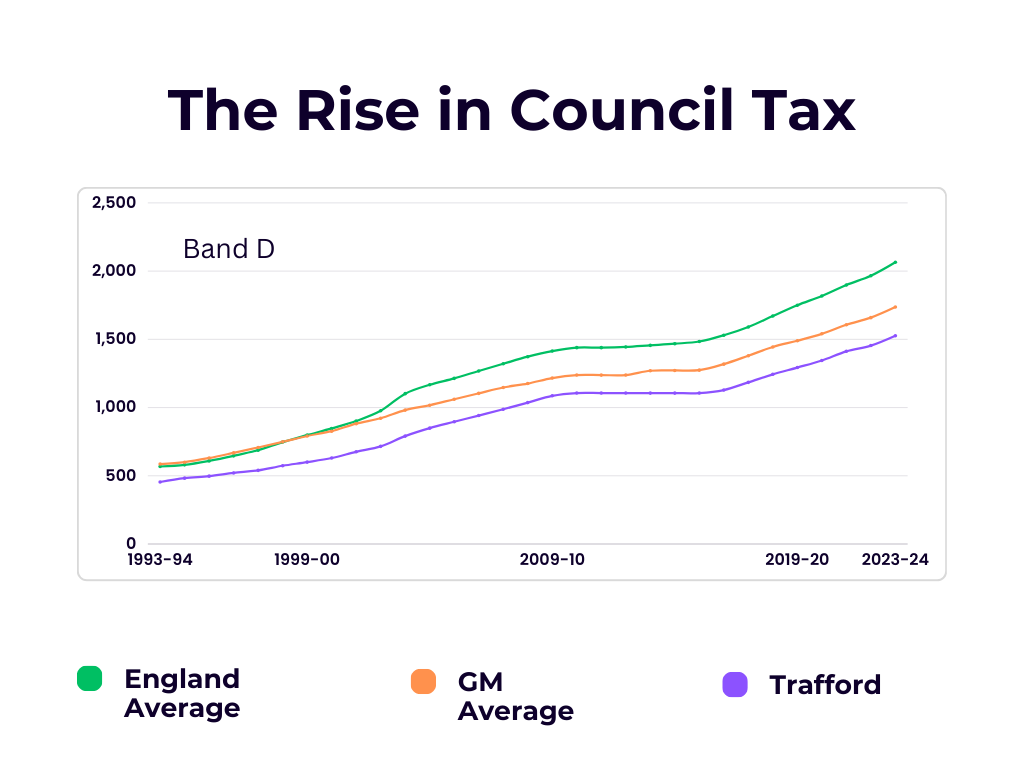
    Council Tax is the main source of income. Trafford has traditionally kept council low. Since 2010, the council’s ability to increase its council tax has been limited with a period of effective freeze followed by percentage caps on increases. As a consequence, if anything, Trafford has fallen further behind.

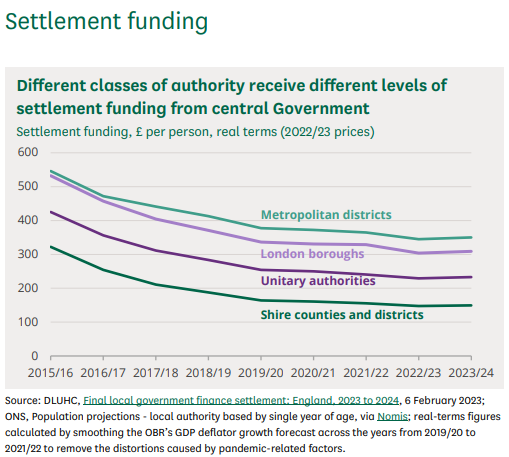
    Nevertheless, despite the capping of council tax, the degree to which Trafford relies on Council Tax has increased. In 2008 council tax made up 55% of our income, this year it makes up 58% of our income. The Government has decreed extra responsibilities such as Public Health, but accompanied by lower levels of central funding.

    Line graph comparing Trafford's Council Tax with England and GM average

    Decline in Central Funding

    Fees and Charges

    Sales, Fees, Charges and Rents brought in £46m this year and I’m sure there’s an expectation to bring in more next year. The sale of council properties and assets is an exhaustive process. It can be counterproductive and increasing fees and charges beyond what the public will tolerate is a fool’s errand.

    Undoubtedly, there’ll be some increases. For instance, I don’t have any explanation as to why we don’t charge for Sunday parking but it wouldn’t bring in huge amounts.

    So, Council Tax has to go up again from April!

    Our Income

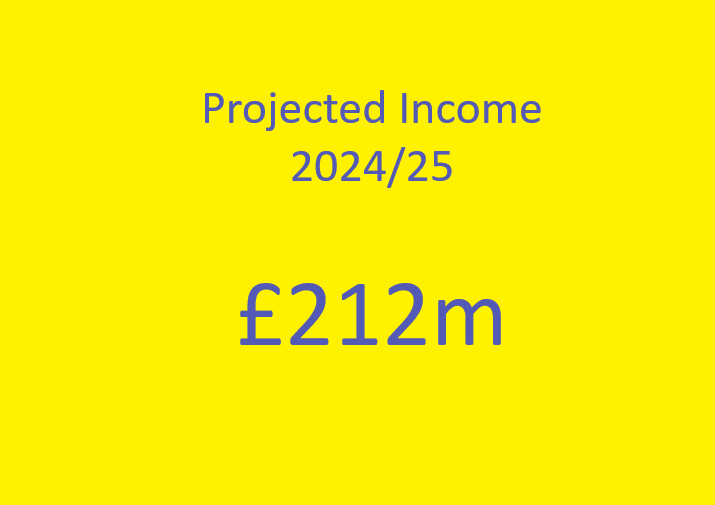
    We know that council tax will rise is schedule to rise by 4.99% including 2% dedicated to social care. On top of our council tax income, we’re granted various amounts from Government as well as Business Rates. By December our total funded spending was scheduled to be £212m.

    The Government describes this figure as the Core Spending Power of a Council.

    Our Spending

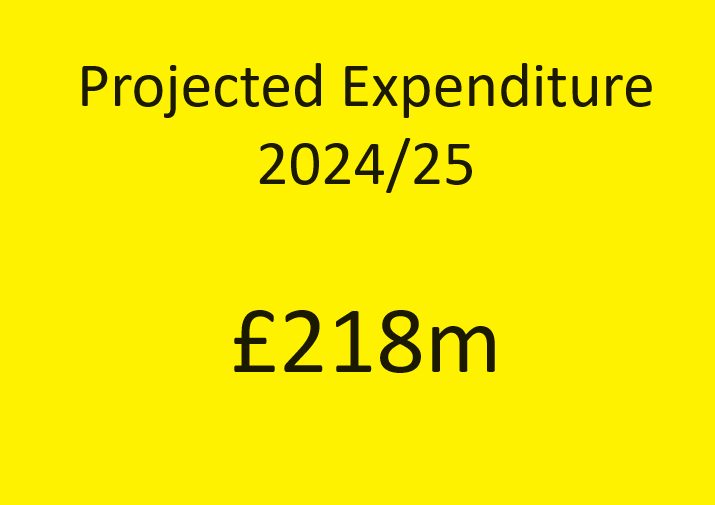
    The latest published figures show a projected expenditure of £218m. This figure was included in November’s draft budget. It’s clearly out of date. However, whilst the leadership team were tasked with getting this figure down, we know that actually, the £218m figure has been growing. So it’s getting harder. The government has found another £500m nationally for social care but our share in Trafford won’t be enough on its own to bridge the gap.

    If our Council Tax was at the average level in Greater Manchester we would not have this gap, but it would require Trafford to break the Government’s cap on Council Tax increases to get there.

    We’re in an especially difficult position because our reserves are so low. We will have to use reserves in the current year.

    Whilst the Tory Government has been using Local Government to carry so much of the austerity burden, I’m not expecting any future Labour Government to ride up over the hill and bestow their beneficence on Trafford. We are not in a good position.

    I suspect we’ll have to make some painful choices, but we’ll get to a balanced budget. We need to get to a position that is sustainable for a few years and that’s going to be incredibly difficult.

    Mr Micawber was wont to say “Something will Turn Up!”.

    I don’t think it will!

  • Latest Stretford Consultation: heights, greenspace and parking

    Latest Stretford Consultation: heights, greenspace and parking

    I suppose I ought to make a full disclosure: l am on the record as preferring the demolition of the Mall and pretty much most of King Street apart from the former Post Office.

    I felt the old town centre was turned in on itself and didn’t even attempt to capture passing walking trade coming from the Metrolink or bus connections. I overwhelmingly lost that argument. The majority wanted to retain and improve salvageable assets in the then-existing layout. I get that and I’m happy to support the regeneration of the town centre via the retention of parts of the Mall that have had the roof removed.

    Generally, I think there’s a consensus that the centre should be smaller and that the night-time economy; restaurants, entertainment and bars should play an increasing role. There’s a general acceptance the space created in reducing the Mall can be used for housing. Nevertheless, it’s vital that the town centre continues its day job of performing as a place for routine shopping and services. I sense that the scale of retail is still not settled.

    We know that King Street is the retail heart of the centre and that links via King St Square to Quality Save and Little King Street next to the multi-storey car park.

    Known retail arteries of redeveloped town centre

    What I don’t know is what is going on around that new ‘central park’ just below the multi-storey. If those blocks are purely residential I think we have a problem. On the other hand, if the ground floors are taken up by prime retail like Marks and Spencer, or similar then that changes everything.

    This image below hints at shop fronts surrounding the central park. I wish they were more explicit as it makes all the difference to my thoughts on the Central Park in the consultation below.

    Consultation

    The latest consultation covers three aspects. It covers:

    • the maximum heights of apartment blocks,
    • the realignment of the central park strip of green space.
    • a revision in car-parking to retain surface parking for Aldi,

    Maximum Heights

    The architecture is important. The consultation is on a desire to increase the height of blocks close to the centre to 12 storeys. This is still 3 storeys shy of Circle Court at Lostock Circle, so it’s hardly massive. And while Circle Court became hard to update, it was never the scale that was the problem. It was a very popular block with tenants.

    Judging by public submissions, however, not to mention social media, these medium-sized towers do seem incredibly unpopular with Stretford residents. My problem is that they’re hidden away. I really want Stretford to have active frontages facing on Kingsway and Chester Road. The interior elements of the centre should be peeping out and enticing me to shop. The apartments should work with the retail elements to put people and movement in at ground level.

    It doesn’t look at this stage that the residential is integrated with the retail elements very much at all. As a whole, the development looks to be zoned. I don’t mind the heights so much as the fact residential elements are not working with the retail elements as much as I had anticipated.

    I’m hoping the computer-generated images are just illustrative. There are many examples of really good integration between retail and residential. It’s nothing new, Paris managed this more than 100 years ago.

    Reorientation of Central Park

    We were discussing this on Facebook. I think we came to the conclusion that it would work better as a paved square area. I wonder if the aspiration for green space is working against good design. It does deserve to be the prime area in the whole development with the best retail units.

    Aldi retail surface car park

    I hate this proposal. It cuts Aldi off leaving no interplay with the town centre. The ‘left-turn in, left-turn out’ proposal is awful, putting more traffic onto the roads, looking for somewhere to do a U-turn. Lastly, the car park itself works as barrier for those walking from the Sevenways direction.

    Summing Up

    On the whole, this is still exciting. I’m not sure the consultation has helped. It’s not easy to consult on heights of buildings without understanding how the buildings interact with the centre. All the focus has been on King Street and Little King Street. The town centre is so much more than this. I can’t pretend to like the arrangement with Aldi but there are hints there are contractual obligations that have to be met. I’d love to see Central Park become a town square with good quality retail on four sides. I’m still hopeful.

  • Trust me, I’m a politician. How can we regain the trust we’ve lost?

    Trust me, I’m a politician. How can we regain the trust we’ve lost?

    I picked up Anthony Seldon’s book at Stretford library. It was published just as the MPs’ expenses scandal was peaking so perhaps a little out of date, but it got me interested in the latest figures which are summarised below:

    • 35% of the UK population stated that they trusted the national government, which is lower than the Organisation for Economic Co-operation and Development (OECD) average (41%).
    • 42% of the population reported that they trusted local government and 55% trusted the Civil Service.
    • Trust in public services was higher than trust in the national or local governments, with the NHS the most trusted public service (80%), followed by the courts and legal system (68%).
    • 75% of the population believed that the UK government should place a higher priority on creating conditions for businesses to thrive, 64% said they should place higher priority on reducing climate change and 54% believe they should place higher priority on reducing the national debt.

    Office of National Statistics – Trust in Government 2022

    So, only 35% trust the national government and 42% trust their local council. I’ve seen some commentators conclude this is a plus for local government. I’m not so sure. By definition, councils are in your neighbourhood. A high proportion of a council’s services are universal; and even if we’re not receiving a particular service, it’s likely we know someone who is. Yet, 58% don’t trust their local council. I think that’s pretty bad.

    It would be interesting to see how much councils trust their residents. Trust is generally seen to be a two-way process. If councils don’t trust their residents, it would perhaps give us a clue as to why trust has broken down.

    It seems pretty obvious that neither the leadership of the Conservative Party nor of the Labour Party trusts their own members. As a constitutionally defined democratic socialist party that’s a bit of a problem for the Labour Party and one that we’ll have to tackle.

    I think this breakdown in trust is dangerous. Other countries have not deteriorated to the extent that the UK has. We saw what happened with Brexit and more than anything, that had to be about trust.

    Clearly, I have my own ideas, but firstly, I think we should be asking you. What needs to happen to restore trust in our democratic institutions?

    I look forward to hearing from you

  • Committees may not be a good way to design a car, but they’re the way to make sure the city ticks

    There have still been a few meetings happening as we enter the summer break. Whilst I haven’t attended all in person, the importance of the subject matter has made it imperative to read the reports and catch the video streams. Committees are hard work and you still get the occasional member who can never reach a full stop, but there’s been so much else to take on board.

    Executive
    Greater Manchester Scrutiny
    Trafford’s Health Scrutiny
    Datalab update
    National Policy Forum

    Executive

    Although I’m not a member of the Council’s Executive, primarily it’s their decisions upon which I’ll be judged when it comes to being re-elected. I like to follow what they’re up to.

    Items on the agenda included:

    A new Culture Strategy for Trafford.

    The culture strategy document is available here. I like that the emphasis is as much on bringing on new talent as putting on shows. My own feeling is that Greater Manchester has improved its arts output hugely since Salford fought off the City of Manchester in winning the BBC to Media City, but Manchester still dwarfs everyone else combined. The fact that Oldham Colosseum closed shows how tough it is. I think I’d like to see a Greater Manchester approach and Trafford feeding into that with its strategy but not competing.

    Tennis Investment Project

    This involves a charging policy and the procurement of a specialist operator for the tennis courts the council owns such as at Davyhulme Park and Victoria Park. Initially, it will be trialled and I don’t think they’ve announced yet where the trials will be.

    Active Travel Reprioritisation

    The battle of the A56 cones has almost become a defining cultural phenomenon. However, it looks as though Trafford has received the go-ahead to move forward with a designed scheme that would make permanent arrangements. From the funding point of view, this means including it within the Mayor of Greater Manchester’s Challenge Fund Budget. (The Dept of Transport originally funded the cones as an emergency measure during Covid)

    Sadly, we do not get junction improvements to the Barton Road gyratory and active cyclists heading towards Altrincham will still be deposited into the fast lane of the A56. The approach to design has been to leave the junction in place, but weave a cycle and walking route on and through the central island. It’s a problem because it involves so many crossings which will delay the active traveller.

    Trafford is bidding for £1.6m for the whole scheme to provide permanent segregation from Talbot Road to the M60 including the gyratory weave and crossings. A lot of active travellers have already pointed out that the M60 is not where they usually choose to end their journey and that is a problem, at a minimum their heading to Dane Road.

    My conclusion on the A56: So the A56 scheme is not perfect; far from it. Despite this, I am still supportive of the bid. The cones have been so divisive and have brought out the worst in people. We need to move on.

    Additional Schemes

    The two Talbot Road junctions with Chester Road and with Greatstone Road have already received full business case approval and they’re particularly anticipated with a degree of eagerness. I’ve been pursuing Greatstone Road junction improvements for pedestrians for a number of years so there’s a degree of fulfilment attached to that.

    Pipeline Scheme – Davyhulme Active neighbourhood (technically route D). I really need to publicise this more. I am yet to be convinced it’s a worthwhile scheme. They’re hoping to have the business case submitted by January 2024. Essentially, it’s five low-traffic neighbourhoods (LTN)s. We know Rishi Sunak does not like LTNs, but they can be worthwhile – most of Stretford around Victoria Park is essentially a low-traffic neighbourhood, they’ve cut off exits onto Chester Road or Kingsway. My initial reaction to the Davyhulme scheme is that it condenses the traffic onto residential streets rather than main roads and that’s a problem.

    Greater Manchester Scrutiny Committee

    Again, I’m not a member, but in this case, I am a substitute member. Items discussed included.

    Topics included:

    • National Waste Strategy – essentially balancing the need to recycle more with the practicalities of fine-sorting the waste. The government are shifting their position
      Trafford’s Leader, Cllr Tom Ross gave a really top-notch presentation that’s worth watching on the GMCA site
    • Bus Fare Initiatives including capped fares. Funding is in place for 24/25. The introduction has led to an increase of 12% in patronage so GMCA is keen on continuation. To review it again next summer. Franchising will have a positive behavioural effect. In fact, franchising is so exciting in that it opens up so many possibilities. The tragedy would be if funding was pulled from 2025.

    Trafford Health Scrutiny

    Another packed meeting. Items included:

    Adaptations Team and Occupational Therapy Update – This is a major contributor to quality of life and hospital discharges. The team has a serious backlog that can be traced back to Covid. Scrutiny was looking at the action plan to alleviate the delays.

    Hospital Discharge – A broader look at resilient discharge – making sure that patients leaving hospital have the support needed to sustain themselves.

    Integrated Care System Update – This is yet another reorganisation; in this case to replace the Clinical Commissioning Group (CCG). Although it sounds dry, this is a vital element of health provision. The Greater Manchester model is proving itself in terms of life expectancy. The journey to transform health care though is only just beginning and building a system that integrates both care and health provision requires organisational change. There’s a huge amount of work going on behind the scenes. It’s vital that scrutiny monitors this change but it’s quite a significant task.

    Trafford Datalab Presentation

    This was presented last week as part of my induction on returning to the council, but I don’t need any persuasion. I love the work they do and their output is generally open data. I just want to highlight one particular page – the census data. It’s a cornucopia of intelligence but vital in targeting and championing resources.

    Labour’s National Policy Forum

    Gender recognition law has been a divisive subject in the Labour Party and elsewhere, but particularly in the Labour Party.

    I wanted to briefly state that I believe the position taken at the National Policy Forum at the weekend seems to me to be just about right. I know that others will disagree but I back Anneliese Dodds:

    We need to recognise that sex and gender are different – as the Equality Act does. We will make sure that nothing in our modernised gender recognition process would override the single-sex exemptions in the Equality Act. Put simply, this means that there will always be places where it is reasonable for biological women only to have access. Labour will defend those spaces, providing legal clarity for the providers of single-sex services.

    Anneliese Dodds – Labour Shadow Secretary of State, Women and Equalities – Guardian 24 July 2023
  • AI puts the mystery back into doing the Councillor thing

    AI puts the mystery back into doing the Councillor thing

    As I strolled through the streets of this typical neighbourhood, an inexplicable feeling tugged at the back of my mind. It was as if there were a hushed emptiness lingering in the air, whispering secrets that went unnoticed by most. I couldn’t shake off the sense that there were more vacant houses than usual, their windows peering into an abyss of abandonment. Curiosity drove me to investigate further, and with an insatiable urge, I delved into the realm of statistics. What I discovered both startled and confirmed my suspicions. The data reflected a stark reality, substantiating my intuitive perception: the number of empty houses had indeed risen significantly. The numbers, like silent witnesses, silently echoed the story that my senses had perceived, unravelling a tale of shifting tides and changing landscapes in our community.

    I couldn’t find the words so I asked ChatGPT to ‘write me a paragraph on sensing that there were more empty houses than usual and finding that the statistics were backing me up’. I know it’s not the best-crafted instruction that’s ever been written, but I love what AI came up with. It’s a lot better than noticing on a leaflet-round that it’s the third seemingly long-term empty house that you’ve come across, and then picking up on similar instances on your next round.

    It was the Friends of Carrington Moss people who serendipitously supplied some statistics that pointed to it being much more than a coincidence.

    I don’t want to be drawn into the debate about whether Carrington Moss should be built on, or at least not in this instance. However, I do want to focus on the figures. They’re telling us that the extra homes we’re building are not providing the extra number of households we would expect. This is not due to demolition as we’re using a net additional dwellings figure. It might include some that are in the process of being emptied as is currently happening at Circle Court. I can’t think of anything major in 2021 that would account for Trafford’s figures, but they’re the worst. There’ll be some that have become Airbnb and similar. My instinct says the amount becoming Airbnb is nowhere near these figures but the number of empty homes could be a major factor.

    The council will have figures on empty properties. I am hoping they are equally high. We’ll see, but it seems definitely worth pursuing.

  • I’m back as councillor and it feels so good

    I’m back as councillor and it feels so good

    Let the light in

    I’ve always been committed to keeping people informed. Hopefully, you’ll get a sense of what I’ve been doing and be able to tell me what I’m doing wrong or doing right.

    I’m hoping to get my email address and phone number working this week and I’ll publish them as soon as they’re live.

    Not having email/phone hasn’t stopped me taking on casework/campaigns and people can still get in touch with me via the comments here, or via facebook/twitter.

    And here’s a taster of what I’ve been doing

    • Parkway road surface – Facebook has been flooded with comments on the road surface there. I’ve liaised with officers and there’s hope of the worst areas being addressed in the next few months. It’s an expensive job and they’re budgeting on it being something like a fifth of the total road spending. Fingers crossed.
    • Trees – There’s some very big highway trees that need managing (see photo). I’ve been championing the prioritisation of trees that residents have raised with me.
    • Overhanging Vegetation blocking footpaths – Reported one instance to the council after it was raised with me. A second instance on Barton Dock Road has been referenced but I’m awaiting the exact location.
    • Floating the issue of empty houses – This is more of a whim. There just seemed a lot of empty houses that I was coming across during the campaign. I raised it on social media and it seems to be worth pursuing as others were seeing the same; and I’ve seen some census figures that seem bear out the impression. I want to take it a little further.
    • Planning Concerns over plans for a new house on a garden plot in Davyhulme.
    • Amey Trying to update myself on how service level requirements might have evolved at review.

    Settling in

    Jill Axford is trying to get advice surgery locations sorted. We should have these in place in the next couple of weeks.

    With regard to which committees I’m sitting on, we’re having our group AGM this week.
    Tom Ross as leader has announced his cabinet/executive and it’s very much in continuity. Jo Harding gets the finance portfolio and she’ll be very good at it.

    It’ll be interesting to see how we evolve under Tom Ross’s leadership.